Door Closed, World Open: Why More Backpackers Are Choosing Private Rooms at Hostels
For a long time, the dorm bed was basically a rite of passage. Six strangers, one bathroom, somebody's alarm going off at 4 a.m. — if you couldn't hack it, the story went, maybe you weren't a real backpacker. But that story is getting rewritten, and the people rewriting it aren't soft. They're just smarter about what they actually need.
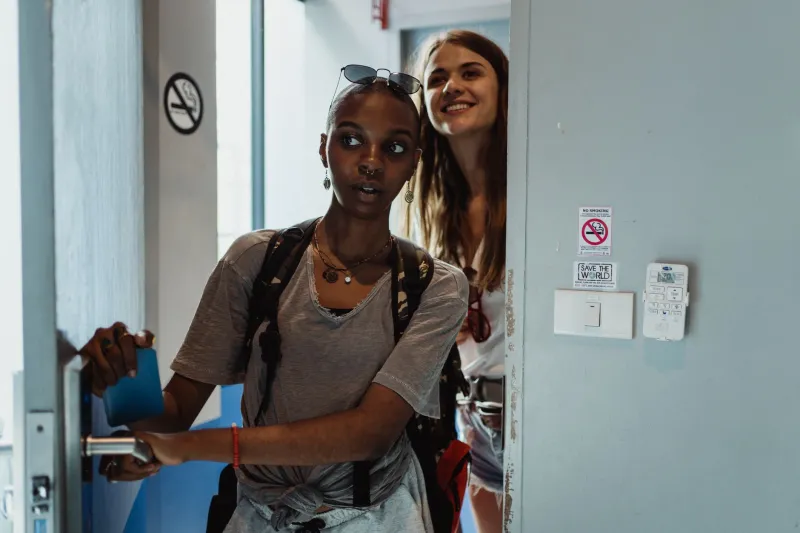
Across hostels from Portland to Prague, a quiet but unmistakable trend is picking up steam: backpackers are booking private rooms. Not boutique hotels, not Airbnbs — private rooms inside hostels, where the common room still buzzes at midnight and the community board still fills up with hiking invites and group dinner plans. The walls are thin. The Wi-Fi is shared. The vibe is unmistakably hostel. But when the day is done, these travelers close a door that belongs only to them.
The Dorm Wasn't Broken — But Something Was
Ask anyone who's made the switch and they'll usually say the same thing: it wasn't one bad night that did it. It was an accumulation.
Marcus, 29, from Denver, spent three years bouncing between dorms across Southeast Asia and Central America before he started quietly upgrading. "I didn't want to admit it at first," he says. "Like, wasn't I supposed to love the chaos? But I'd get to a new city feeling genuinely excited, and then by day two I was exhausted in this specific way — not from walking or heat, but from people. Constant, unavoidable people."
That specific exhaustion has a name now, and it's showing up more openly in backpacker conversations. Mental health awareness has reshaped how younger travelers talk about their needs, and the pandemic — which gave everyone a crash course in the value of personal space — accelerated the shift. The stigma around wanting privacy has largely evaporated.
Jordan, 26, from Austin, put it plainly: "I realized I was spending half my social energy just managing the dorm situation — the lights, the noise, the guy who ate crackers at 2 a.m. — and I had nothing left for the actual trip. A private room gave me back my mornings. I wake up, I think, I plan. Then I go be a person."
The Hostel Private Room Is Its Own Animal
Here's what's easy to miss: a private room at a hostel isn't the same as staying somewhere else. That distinction matters more than it sounds.
The pricing is still firmly budget territory — most hostel privates run anywhere from $35 to $80 a night in the US, compared to $150-plus for even a modest hotel in the same cities. But the real value isn't just financial. It's structural. You're still living inside a community. You still share the kitchen, the lounge, the rooftop, the bulletin board covered in "anyone want to hike tomorrow?" notes. You just don't share a room with five strangers.
Sarah, a hostel manager in Asheville, North Carolina, has watched this shift reshape her booking patterns over the past two years. "We added four private rooms about 18 months ago, mostly as a test," she says. "They fill faster than the dorms now. And these guests aren't hermits — they're often our most socially active guests. They come down to the common area genuinely recharged instead of running on empty."
That's the paradox hostel operators are increasingly recognizing: private room guests often participate more in community programming, not less. When people aren't depleted by shared-space logistics, they actually show up for the group dinners, the pub crawls, the spontaneous late-night conversations that define hostel culture at its best.
What Travelers Are Actually Finding
The most common thing people report after their first hostel private room stay isn't luxury. It's clarity.
"I wrote more in my journal that week than I had in the previous six months," says Priya, 31, from Chicago, who made the switch during a solo trip through the Pacific Northwest. "I had thoughts that were actually mine. Not just reactions to whatever was happening in the dorm."
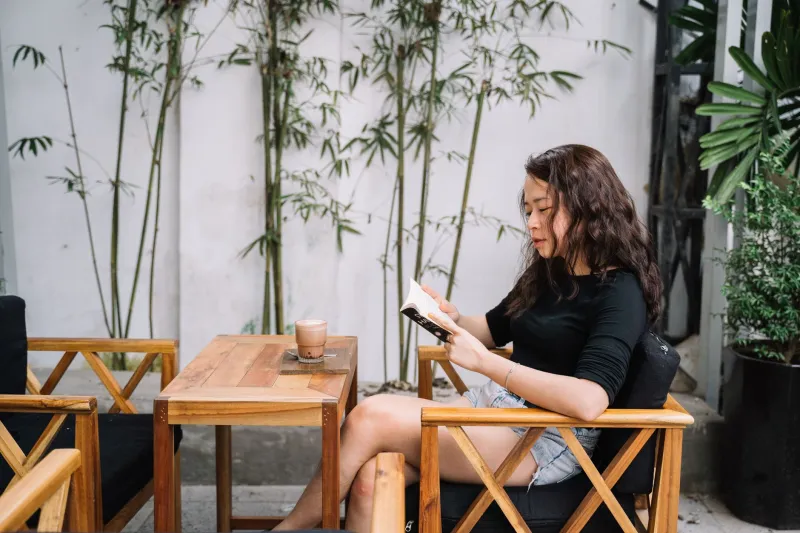
There's also something that comes up again and again: better conversations. When you're not managing sleep deprivation or low-grade social overload, you engage differently. You listen better. You're more present in the common room because you chose to be there, rather than because you have nowhere else to go.
For solo female travelers especially, the private room option has removed a layer of friction that was quietly shaping decisions. "I used to avoid certain hostels because the dorm situation felt uncertain," says Alicia, 27, from Atlanta. "Now I look for hostels that have private options and a strong community feel. That combination is actually kind of perfect."
Hostels Are Adapting — Fast
The business side of this shift is impossible to ignore. Hostel operators who've added private rooms aren't just capturing a new demographic; they're stabilizing their revenue. Private rooms command higher nightly rates with lower turnover friction, and they attract travelers who tend to stay longer.
"Our average stay in a private room is four nights," Sarah notes. "In a dorm, it's two. People settle in when they have space to breathe."
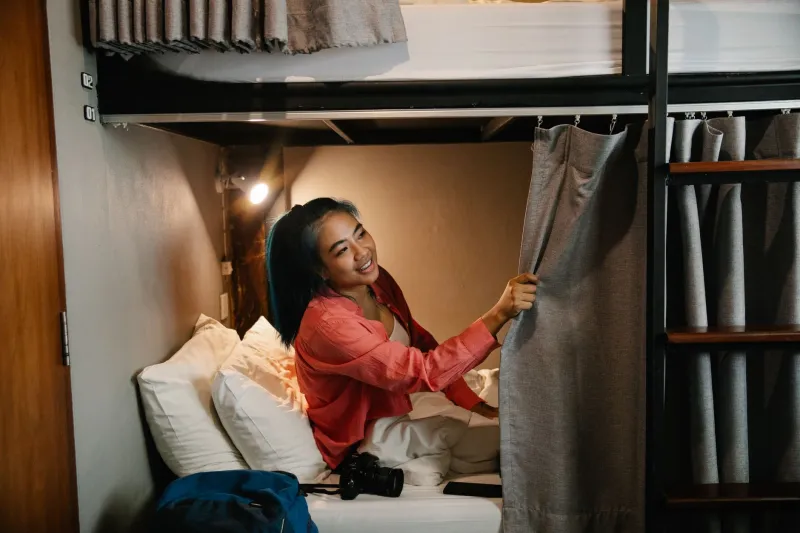
Some hostels are going further, designing hybrid spaces that blur the line between private and communal even more intentionally — think semi-private pods with curtained sleeping areas, or small-group rooms for two or three friends traveling together. The architecture of budget travel is evolving in real time, and the travelers are the ones driving it.
You Don't Have to Choose Between Solitude and Community
Maybe the biggest thing the private room trend reveals is that backpacker culture was always more complicated than its mythology. The romanticized version — everyone crammed together, friendships forged from shared discomfort, the badge of the bottom bunk — was never the whole picture. People have always needed different things.
What's changed is the permission to say so out loud.
Closing the door doesn't mean closing off. For a growing number of travelers, it means the opposite — finally being rested enough, grounded enough, and genuinely present enough to walk back into the common room and actually connect.
Sleep cheap. Wander far. But give yourself somewhere to land at the end of the day. Even if that somewhere is just a door with a lock and six uninterrupted hours of quiet.
You'll be better company for it.