Alone Together: How Burned-Out Backpackers Are Using Hostels to Actually Recover
Somewhere around week six of her Southeast Asia trip, Mara, a 27-year-old graphic designer from Portland, stopped wanting to do anything. Not in a dangerous way — more in a I cannot look at one more temple or read one more bus schedule way. She'd been moving every two to three days, sharing dorms with strangers, making small talk on repeat, and optimizing every decision like she was running a startup instead of taking a vacation.
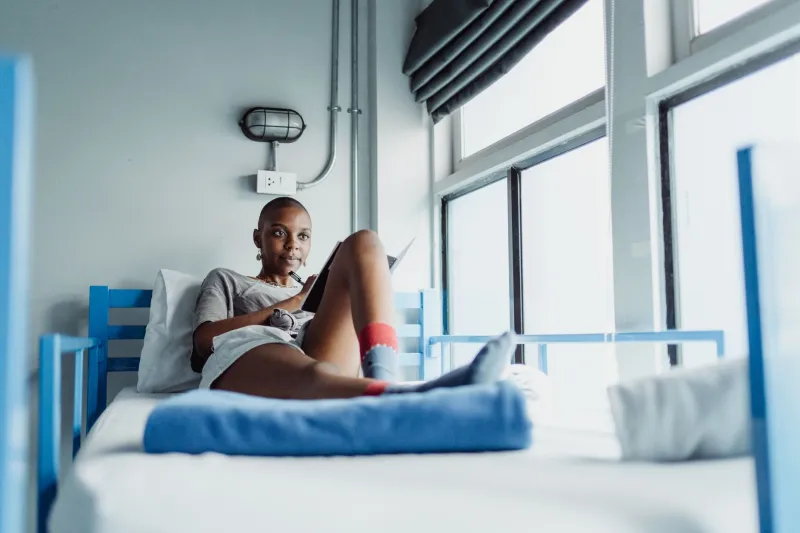
So she did something that felt almost radical: she booked a private room at a hostel in Chiang Mai, closed the curtains, and stayed for five days without a single agenda item.
"I almost booked an Airbnb," she said. "But I didn't want to be completely alone. I just wanted the option of people."
That distinction — the option of people — is at the heart of what's quietly becoming a trend among American backpackers. Call it the hostel detox. Call it structured solitude. Whatever the name, more travelers are deliberately using the hostel model not as a social engine, but as a pressure valve.
The Burnout Nobody Talks About
Travel burnout is real, and it hits differently than regular burnout. You're supposed to be having the time of your life. You've saved for this. You've told everyone back home how incredible it is. Admitting that you're exhausted, overstimulated, or quietly falling apart can feel like a personal failure — especially when your Instagram feed suggests everyone else is thriving.
Decision fatigue compounds the problem fast. Where to sleep, what to eat, which route to take, whether to trust the guy at the bus station, how much to haggle, when to leave — backpackers make hundreds of micro-decisions daily that most people at home never have to think about. Over weeks or months, that cognitive load stacks up.
For introverted travelers especially, the social expectation embedded in hostel culture can tip from energizing to draining almost overnight. The common room that felt electric in week one can feel like a performance requirement by week eight.
Why Hostels — Not Hotels, Not Airbnbs — Are the Fix
Here's the counterintuitive part: the hostel is actually one of the best places to recover from exactly this kind of burnout. And the staff will tell you so.
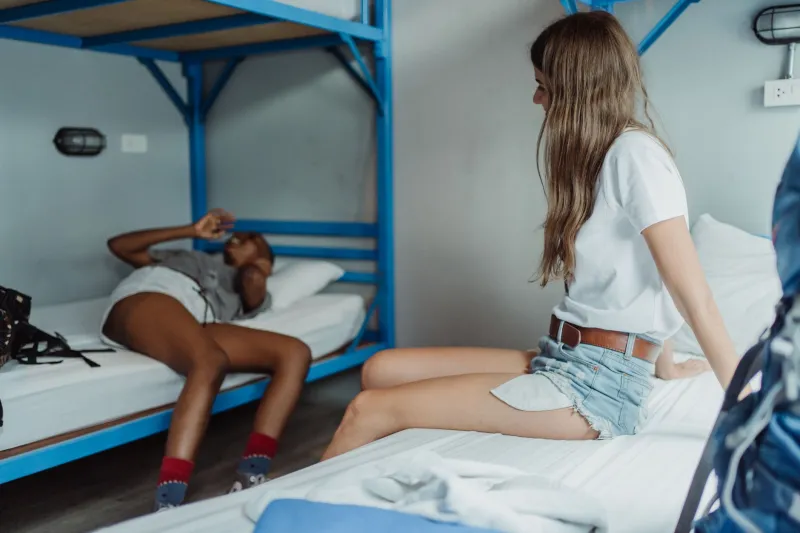
Jamie, a front desk manager at a hostel in Lisbon who's worked in the industry for four years, has watched this pattern play out dozens of times. "We get guests who book a private room and basically disappear for three or four days. They come down for breakfast, maybe sit in the garden for an hour, and that's it. And then by day four, they're chatting with everyone like nothing happened."
The key, Jamie says, is that hostels offer a specific kind of ambient community — one you can opt into or out of without consequence. Nobody tracks whether you showed up to the pub crawl. Nobody knocks on your door. But the hum of other travelers, the background noise of the common room, the smell of someone else's coffee — it keeps isolation from calcifying into loneliness.
That's a meaningfully different experience from an Airbnb, where the silence is total, or a hotel, where the social infrastructure simply doesn't exist. Hostels, almost by design, hold space for both extremes.
The Private Room Paradox
For years, booking a private room at a hostel felt like a contradiction — why pay hostel prices for hotel-style solitude? But the math has shifted, and so has the mindset.
Private rooms at hostels often run $40–$80 a night in major cities, compared to $150–$300 for a comparable hotel. You still get the shared kitchen, the lounge, the staff who know every cheap local spot, and the loose community of fellow travelers. You just get a door you can close.
Marcus, a 31-year-old teacher from Chicago who spent three months backpacking through South America, used private rooms strategically after a rough stretch in Colombia. "I was anxious, I wasn't sleeping well in dorms, and I needed to reset. I booked a private room for a week and it was the best money I spent the whole trip. I could actually think again."
He didn't stop being part of the hostel. He just stopped performing being part of it.
What the Introverts Already Know
Introverted backpackers have been quietly doing this for years — using hostels as a social buffer rather than a social obligation. The community is there when you want it. The exit is always available.
What's newer is the explicit framing: travelers are now booking hostel stays specifically as a recovery tool, not just defaulting to it when they can't afford anything else. They're choosing the hostel because of what it offers the overwhelmed traveler, not despite it.
Some hostels are even starting to recognize this. Wellness-adjacent amenities — hammock gardens, quiet reading nooks, yoga mats available at the front desk — are increasingly common in properties that used to hang their entire identity on nightlife. The party hostel isn't dead, but it's sharing the market with something slower.
How to Do Your Own Hostel Detox
If you're somewhere in the middle of a long trip and you feel the walls closing in, here's a framework that's worked for a lot of travelers:
Give yourself permission to stop moving. Book at least four or five nights in one place. The constant packing and unpacking is its own kind of drain.
Upgrade your sleeping situation. If you can swing a private room, do it. If not, try to book a smaller dorm — four beds instead of twelve — and pick a bottom bunk near the window.
Set a daily quota for interaction. One meal with strangers. One conversation in the common room. That's it. You don't owe anyone your full social self.
Use the kitchen. Cooking your own food is grounding in a way that eating out constantly isn't. It also slows you down in the best possible way.
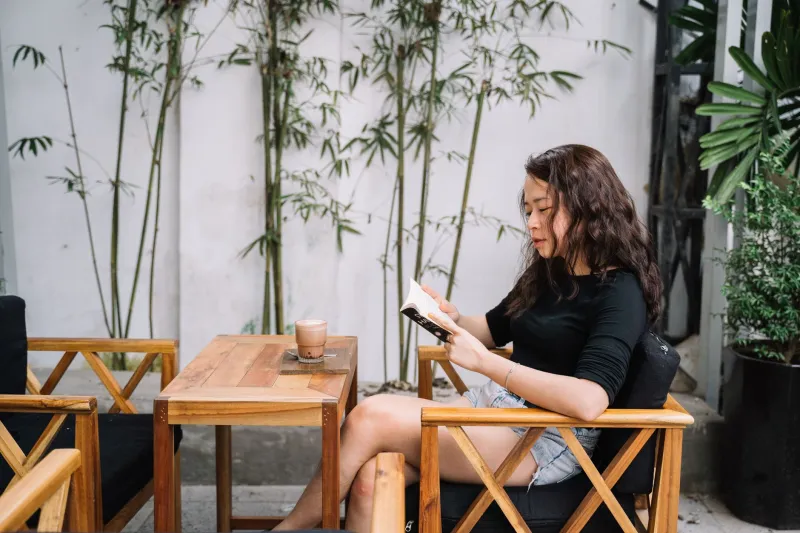
Let the ambient community do its work. You don't have to talk to anyone to benefit from not being alone. Sit in the common room with a book. Exist near other humans. That's enough.
The Hostel Was Built for This
There's something quietly radical about a place that can hold both the guy doing a keg stand at midnight and the woman who hasn't spoken to anyone in two days and just needs to feel like the world is still out there, humming along, without her having to participate in it.
That's the hostel at its best — not just a cheap bed, but a container for whatever kind of travel you actually need. Sometimes that's the party. Sometimes that's the silence just outside it.
Mara eventually left her private room in Chiang Mai. She wandered downstairs on day five, made herself a coffee, and ended up talking for three hours with a guy from Denver who was also mid-detox. They traveled together for two weeks after that.
The community was always there. She just needed a minute before she was ready for it.