When the Party Stops: How to Recharge at a Hostel Without Losing Your People

There's this unspoken script that follows you into every hostel common room. Someone cracks a beer, someone else pulls out a guitar, and suddenly the invisible pressure starts: be on, be fun, be social. If you're not bouncing between conversation circles until midnight, it can feel like you're doing hostel life wrong.
Here's the truth Drifter Jack's has watched play out across hundreds of bunk beds: some of the most seasoned backpackers on the road are also the ones who know exactly when to disappear.
Social burnout is real. It hits introverts first, but it eventually catches up with extroverts too — usually somewhere around week three of a long trip, when the novelty of meeting strangers has worn down into something that feels more like obligation than adventure. If you've ever hidden in a bathroom stall just to get five minutes of quiet, you already know what we're talking about.
The good news? You don't have to choose between protecting your sanity and having a great hostel experience. You just need a smarter playbook.
Why Hostel Culture Can Feel Relentless
Hostels are designed for connection. That's the whole point — shared kitchens, communal tables, bunk rooms where you're literally breathing the same air as six strangers. The architecture itself nudges you toward socializing.
Add in the cultural mythology of the "wild backpacker" — the one with a new best friend in every city and a story from every bar — and it's easy to internalize the idea that you're supposed to be performing extroversion around the clock. American travel culture especially loves this image. We romanticize the spontaneous road trip, the stranger who becomes a lifelong friend, the hostel night that turned into a three-day adventure.
None of that is bad. But the pressure to live that version of travel every single day is where people start to crack.
Give Yourself Permission to Opt Out
The first and most important step is the simplest: decide it's okay to say no.
No to the bar crawl on a Tuesday. No to the sunrise hike when you haven't slept properly in four days. No to the group dinner when what you actually need is a bowl of pasta eaten alone while watching something dumb on your phone.
This isn't antisocial — it's self-aware. The backpackers who last longest on the road are usually the ones who've figured out their own rhythm. They know which nights they're in and which nights they're out, and they don't apologize for either.
You're not here to impress anyone. You're here to actually experience the trip.
Find the Quiet Corners (They Always Exist)
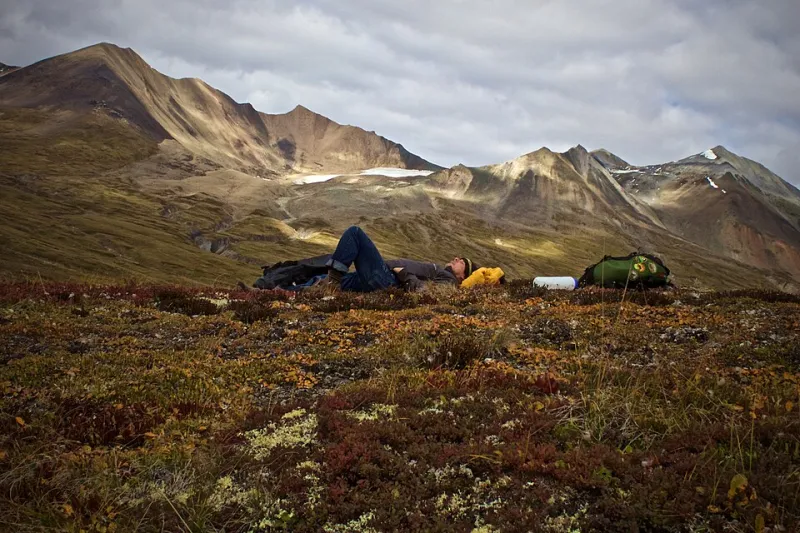
Every hostel has them — the pockets of low-key energy that don't make it into the Instagram grid. A rooftop at 7 a.m. before anyone else is awake. The far end of the common room after the crowd migrates to the bar. A hammock tucked around the side of the building that nobody bothered to mention at check-in.
Make it your business to find these spots early. Do a slow lap of the property when you first arrive. Ask the front desk staff — not "where's the party at," but "where do people go when they want some quiet?" Hostel workers almost always know, and they'll respect you for asking.
Once you've found your corner, use it deliberately. Bring a book, your journal, your headphones. Let yourself actually decompress instead of hovering at the edge of someone else's social scene waiting to feel ready.
Time Your Socializing Strategically
Here's a counterintuitive move: the backpackers who seem most effortlessly social are often the ones who limit when they engage. They're not grinding through every group dinner and every late-night conversation. They pick their moments — and when they show up, they're actually present.
Mornings are often gold for this. The common room at 8 or 9 a.m. has a completely different energy than midnight. The people there are usually slower, more genuine, less performative. Conversations happen naturally over coffee instead of over the noise of a crowded bar. If you want real connection without the exhausting social theater, try shifting your "people hours" earlier in the day.
Late afternoons before dinner are another underrated window — people are winding down from the day, not yet ramped up for the night, and the energy tends to be mellow and easy.
How to Communicate Without Making It Weird
One of the most anxiety-inducing parts of hostel downtime is navigating your bunk room. You're sharing close quarters with people you just met, and telling them you need quiet can feel awkward — like you're rejecting them personally.
You don't have to make a speech. A few low-key moves go a long way:
- Headphones are a universal signal. Put them in and most people will read the room.
- Be warm when you do interact. If you're friendly during the brief moments you engage, people won't take your quiet time as coldness.
- Be honest without being heavy about it. "I'm pretty wiped out tonight, gonna have a chill one" is a complete sentence. You don't owe anyone an explanation.
- Acknowledge the group before you disappear. A quick "Hey, have a great night" as you head to bed lands way better than just vanishing.
Most hostel guests are navigating their own versions of this. You'll find more people nodding along than pushing back.
Recharging Doesn't Mean Missing Out
Here's the thing nobody tells you: the connections that actually last — the travel friendships you'll still text three years from now — rarely come from the loudest nights. They come from the quieter moments. The conversation at the kitchen counter at noon. The person you ran into twice on the same hiking trail. The late-night talk on the hostel steps after the bar crowd had already gone to bed.
When you stop white-knuckling your way through every social situation and start showing up only when you genuinely want to, something shifts. You become more present, more interesting, more yourself. And that version of you is way easier to actually connect with.
The road is long. The trip is yours. Sleep when you need to sleep. Wander when you're ready to wander. The right people will still be there — and honestly, they'll probably be relieved you gave them permission to take a night off too.
Drifter Jack's is built on the idea that travel should feel like freedom, not a performance. Your version of that freedom is valid — even if it involves noise-canceling headphones and a good night's sleep.