Same Bunk, Different Year: The Backpackers Who Keep Returning to One Hostel (And Why It Makes Total Sense)
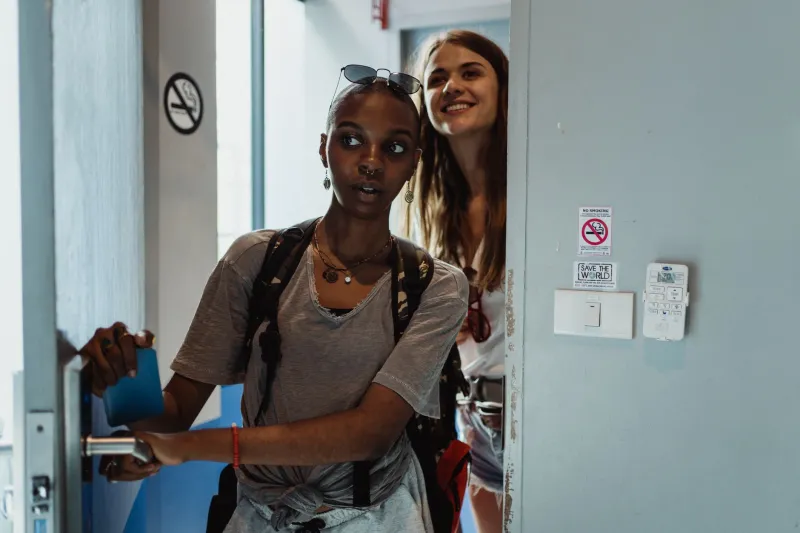
There's a certain kind of travel shame that nobody really talks about. It creeps in when someone asks where you've been, and instead of rattling off a fresh list of destinations, you say, "Actually, I went back to the same place in Oaxaca for the third time." The silence that follows. The subtle raising of an eyebrow.
But here's the thing: that backpacker — the one who keeps returning to the same hostel — might be doing travel better than anyone else in the room.
The "See Everything Once" Myth
American travel culture is obsessed with novelty. New country, new stamp, new story. Instagram feeds are curated to look like a greatest-hits tour of the planet, and the underlying message is always the same: movement equals experience. Standing still — or worse, going backward — feels like failure.
But talk to any long-term backpacker who's been on the road for more than a couple of years, and you'll start to hear a different story. Somewhere along the way, the checklist stops being satisfying. The novelty of a place wears off faster than the jet lag. And then, almost accidentally, someone finds a hostel they can't stop thinking about.
Marcus, a 29-year-old graphic designer from Portland who's been backpacking through Central America on and off since 2019, put it simply: "I've been to twelve countries. But the hostel in Granada, Nicaragua? I've stayed there four times. And honestly, those trips feel the most real to me."
What You Actually Get From Going Back
The first time you show up somewhere new, you're spending enormous mental energy just orienting yourself. Which bus goes where. What's safe to eat. Who to trust. How to get from the hostel to the beach without getting ripped off. It's exciting, sure, but it's also exhausting in a way that can make even the most beautiful place feel like a logistics puzzle.
When you return somewhere you already know, all of that overhead disappears. You walk in like you live there. The staff know your name. You skip the tourist-trap restaurants and go straight to the taco stand two blocks off the main drag. You already know which bunk gets the best cross-breeze.
But more than the practical stuff, there's something deeper happening. You start to actually know a place rather than just passing through it.
Jenna, a 33-year-old nurse from Chicago who's made four trips to the same hostel in Medellín, Colombia, described it this way: "The first time I went, I was a tourist. The second time, I was a regular. By the third trip, the owner's mom was feeding me lunch in the kitchen and telling me about her garden. That doesn't happen when you're just checking a city off a list."
The Hostel as Home Base
For a lot of repeat visitors, a single hostel becomes less of a destination and more of an anchor. They use it as a launching pad to explore a whole region more deeply — day trips, weekend detours, slow bus rides to smaller towns — and then come back to the hostel at the end of it all.
This is actually a pretty smart way to travel. Rather than burning money and energy constantly relocating, you build a base. You get to know the neighborhood on foot. You figure out the rhythms of the local market, the best time of day to be outside, the quiet spots that don't show up in any guidebook.
Hostel owners have noticed the trend. Carlos, who runs a small hostel in Playa del Carmen, Mexico, says repeat guests are some of his most valuable community members. "They become unofficial ambassadors," he said. "New guests see someone who's been here three times and they think, okay, this place must be doing something right. And those return guests — they help the new people find their footing. It's a whole ecosystem."
It's Not About Being Stuck
There's an important distinction worth making here. Returning to a place you love is not the same as being afraid of new experiences. The backpackers who keep coming back to the same hostel aren't avoiding the world — they're going deeper into it.
Marcus is still visiting new countries. Jenna still books flights to places she's never been. But woven into their travel lives is this thread of return, this gravitational pull toward somewhere that already feels like theirs.
"I think people assume that going back means you ran out of ideas," Marcus said. "But for me, it's the opposite. It means I found something worth investing in."
The Relationships That Make It Worth It
Maybe the most underrated part of returning to the same hostel is what happens with the people. Not just the staff — though those relationships are real and meaningful — but the other travelers you keep running into.
The backpacking world is smaller than it looks. Spend enough time moving through it, and you start to see the same faces in unexpected places. But at a hostel you return to regularly, those overlaps become intentional. You start timing your visits with people you met on a previous trip. You make plans in the common room knowing you'll actually follow through on them someday.
That kind of continuity is rare when you're always moving. It's the thing that turns travel from a series of disconnected experiences into something that actually accumulates — a life built on the road, with real relationships at the center of it.
What This Means for How You Travel
If you've never let yourself go back, it might be worth asking why. Is it because returning genuinely doesn't appeal to you, or is it because you've absorbed the idea that "real" travelers don't repeat themselves?
There's no wrong answer. Some people are wired for constant novelty, and that's a completely valid way to move through the world. But if you've ever finished a trip and thought, I wish I'd had more time there — that's worth paying attention to.
The drifter's dilemma isn't really a dilemma at all. It's a choice between breadth and depth, and the best travelers figure out how to hold both at once. Sometimes that means booking a one-way ticket somewhere you've never heard of. And sometimes it means walking back through a hostel door and hearing someone behind the desk say, "Hey — you're back. Same bunk?"
Yeah. Same bunk.