You Can't Go Home Again (And Honestly, You're Not Sure You Want To)
Somewhere between your third month on the road and your first night back in your parents' house, something quietly breaks. Not in a dramatic way. More like a hinge that's been stressed too many times — it still works, technically, but nothing swings the same way it used to.
You're back in the US. Your old room still has the same posters. Your mom made the same casserole. Your high school friends are talking about the same things they were talking about before you left. And you're sitting there, jet-lagged and strangely hollow, thinking: why does this feel weirder than landing in a country where I didn't speak the language?
Welcome to the drifter's dilemma. Nobody puts it in the travel brochure, but it's one of the most common experiences among long-haul backpackers — and it hits hardest when you're stateside, surrounded by everything familiar.
The Reverse Culture Shock Nobody Talks About
There's a well-documented phenomenon called reverse culture shock, but most travel content skims past it in favor of packing lists and destination guides. The reality is messier than a quick paragraph can capture.
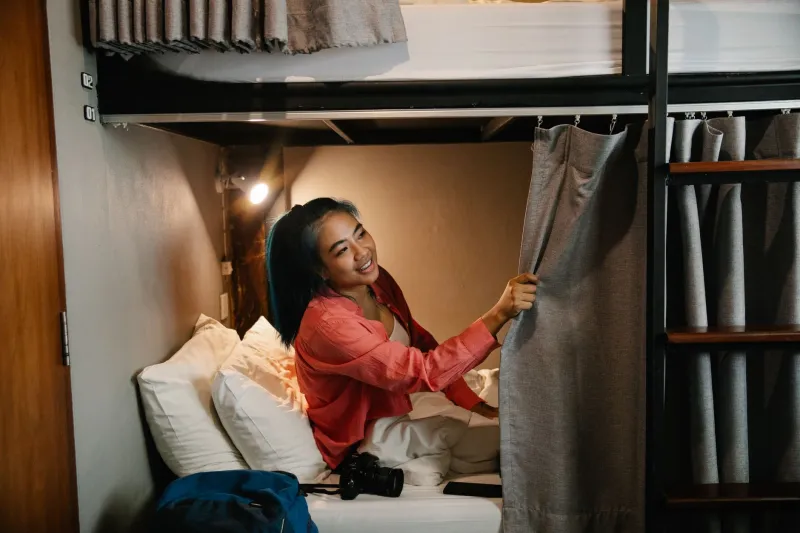
When you've been moving — hopping between hostels in Medellín, Lisbon, Chiang Mai, or Tbilisi — your nervous system recalibrates to constant novelty. You get good at reading a room full of strangers. You learn to find community in a bunk bed conversation. You start measuring time not in weeks but in places.
Then you land at JFK or LAX, clear customs, and step back into a life that was built for a version of you that no longer quite exists. The grocery store feels overwhelming. Small talk about Netflix shows feels exhausting. The silence of a suburban house, after months of hostel common rooms buzzing with six different languages, can feel genuinely disorienting.
It's not that home is bad. It's that you changed, and home didn't get the memo.
The Identity Hangover
Here's the part that's hard to admit out loud: a lot of long-term backpackers come to define themselves by the movement. I'm a traveler. It becomes more than a hobby — it becomes a personality, a value system, a tribe. The Drifter Jack's crowd knows this feeling. You're not just booking cheap beds. You're choosing a way of being in the world.
So when the travel stops — even temporarily — there's a grief to it. Who are you when you're not in transit? When you're not navigating, adapting, exploring? The skills that made you sharp and confident on the road (reading maps, making fast friends, stretching $40 across three days) don't exactly translate to a 9-to-5 re-entry conversation with your college roommate who just got a mortgage.
Some backpackers describe it as feeling like a ghost in their own hometown. Physically present, but somehow not quite there.
When the Hostel Starts Feeling More Like Home Than Home Does
This is where things get genuinely interesting — and where the travel community is quietly rewriting the rules.
A growing number of long-term wanderers aren't trying to "fix" this disconnect by settling back down. Instead, they're leaning into a different model of home entirely. One that isn't tied to a zip code or a lease.
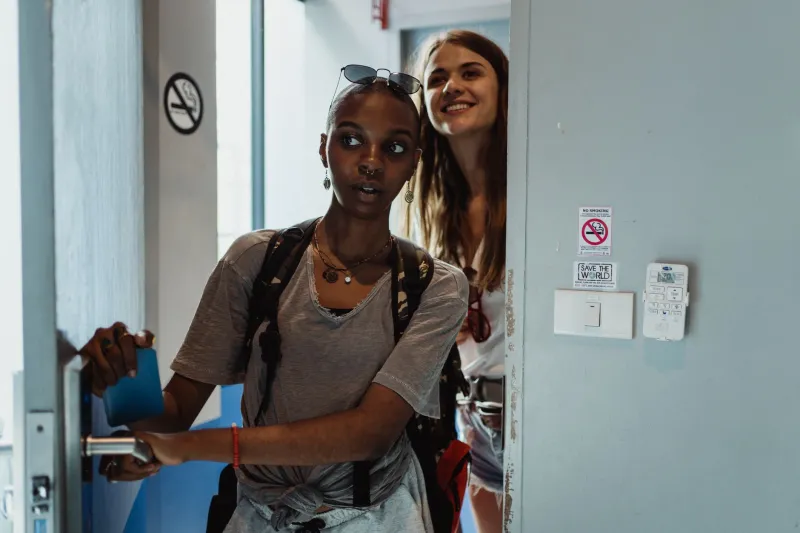
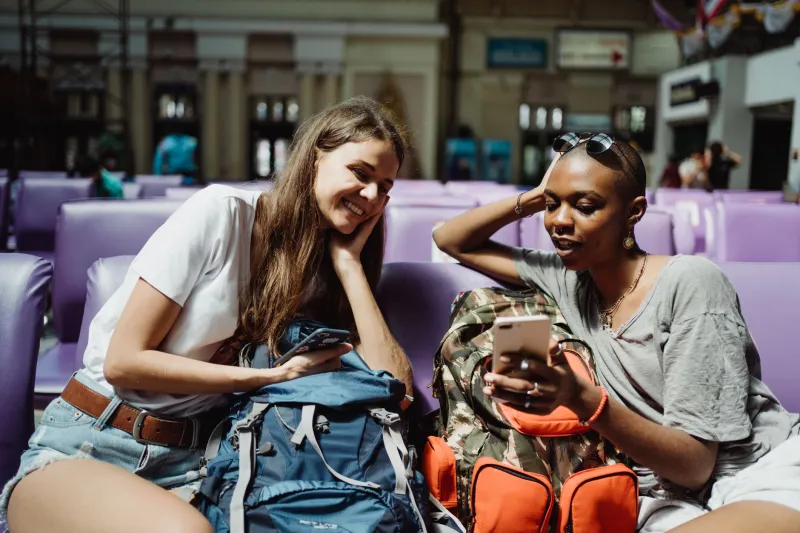
For these travelers, home is a rotating collection of places and people. It's the hostel in Porto where the staff knows your name and saves you the bottom bunk by the window. It's the Tuesday night communal dinner in a Oaxaca guesthouse where you've stayed four times. It's the WhatsApp group with people from seven different countries who you've never lived near but who know you better than most of your neighbors back in the States.
This isn't avoidance. It's a genuine reimagining of what stability can look like.
Redefining Roots Without Planting Them
The traditional American blueprint — grow up, go to college, get a job, buy a house, stay put — was always just one option. But it's been marketed so aggressively that anything else can feel like failure, or at least like a phase you're supposed to outgrow.
Long-term backpackers are increasingly pushing back on that framing. And the infrastructure is starting to catch up with them.
Digital nomad visas now exist in over 50 countries. Coliving spaces are blurring the line between hostel and apartment. Some hostels have started offering monthly rates that make them genuinely competitive with short-term rentals — especially in cities where rent has gone completely off the rails. For someone earning US dollars remotely, the math can actually work in favor of staying perpetually mobile.
But beyond the logistics, there's something more fundamental happening. These travelers are building community rather than permanence — and finding that community, when it's real, scratches the same itch that home is supposed to.
What to Do When You're Stuck in the Middle
Not everyone can or wants to stay on the road indefinitely. Life has a way of creating anchors — family obligations, health stuff, career pivots, relationships that require a shared time zone. So what do you do when you're genuinely caught between two worlds?
A few things that actually help:
Stop pathologizing the feeling. The discomfort of not fitting cleanly into your old life isn't a sign that something's wrong with you. It's a sign that you grew. That's the whole point.
Find your people stateside. They exist. Other returned travelers, backpacker communities, even online forums where people are processing the same weird in-between feeling. You don't have to explain yourself to everyone — just find the ones who get it.
Keep one foot in the hostel world, even when you're home. Stay connected to travel communities. Plan the next trip, even if it's months away. Having something on the horizon does something important for the wanderer brain — it keeps the identity alive without requiring you to be constantly in motion.
Give yourself permission to grieve the road. Missing it doesn't mean you made a mistake coming home. It means the experience mattered. Let it matter.
The Honest Truth About Belonging
Here's what nobody tells you before your first long trip: the hardest part of travel isn't the overnight buses or the sketchy border crossings or the nights when your bunk neighbors won't stop snoring. The hardest part is that it changes your relationship to belonging — permanently.
Once you've felt at home in a 12-bed dorm in Southeast Asia, once you've had a conversation at 2 a.m. with a stranger from Brazil that felt more real than most conversations you've had in years, the conventional definition of home starts to feel a little thin.
That's not a tragedy. It's actually kind of a gift — even when it's uncomfortable.
The drifter's dilemma doesn't really have a resolution. It just has a reframe. Home isn't the place you came from. It's the feeling you're always chasing — and sometimes, in the most unexpected corners of the world, you find it in a bunk bed with a lumpy mattress and a locker that doesn't quite latch.
Sleep cheap. Wander far. Live wild. And if home starts feeling foreign? Maybe that's exactly where you're supposed to be.