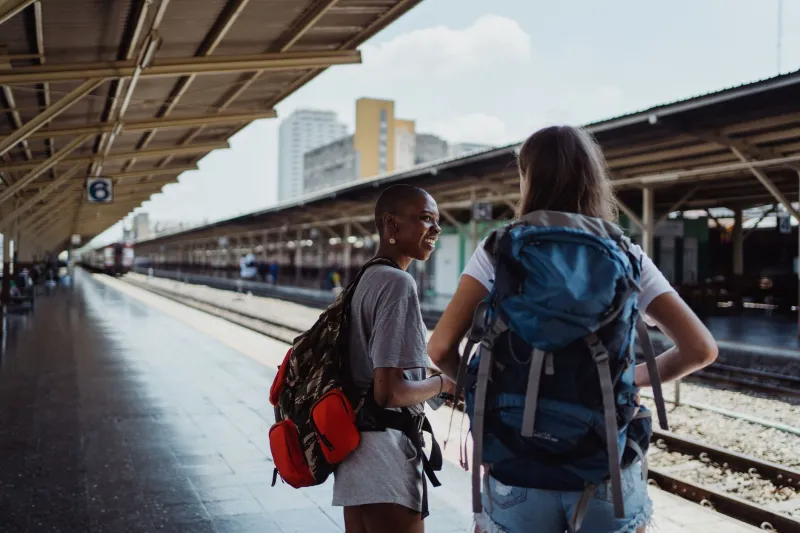
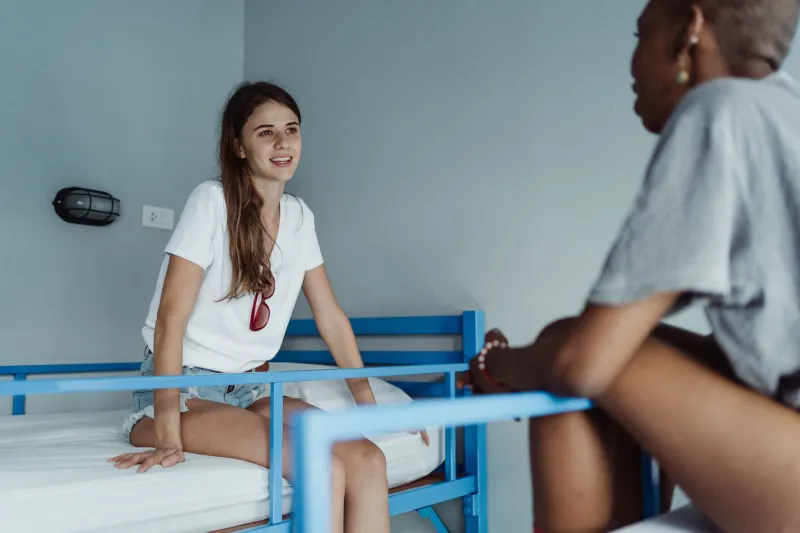
Bunk 4B Changed Everything: The Strangers Who Accidentally Rewired Backpackers' Lives
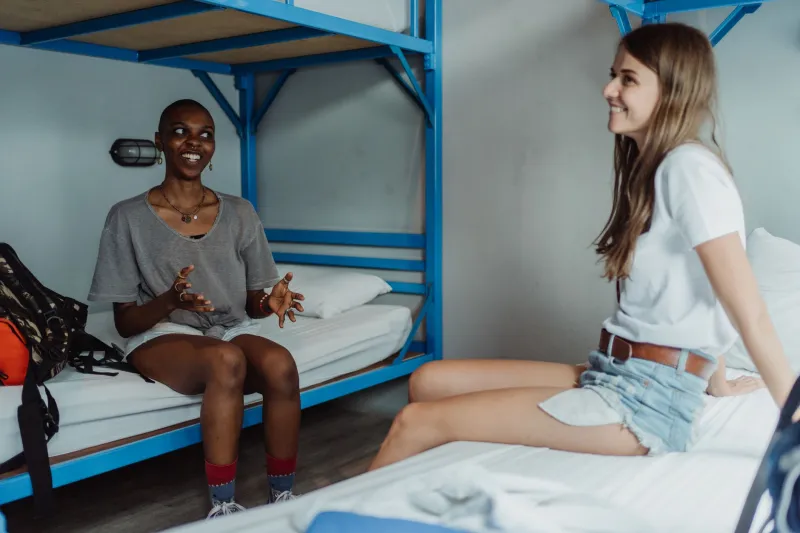
You didn't plan for it. You were just trying to find your phone charger in the dark without waking anyone up. And then the person in the bunk across from yours whispered, "You need help?" — and somehow, six months later, you're living in a city you'd never heard of, working a job that didn't exist in your vocabulary before that night.
This is what hostel dorms do. Not always. Not even often, if we're being honest. But often enough that backpackers have a name for it — the hostel lottery. You check in, you get assigned a bunk, and you have absolutely no idea whether your neighbor is going to be a snorer, a philosopher, a future business partner, or the person who finally convinces you to go to Vietnam.
The Algorithm That Actually Works
Hotels sort you by price point. Airbnbs sort you by neighborhood preference and how many stars the listing has. But a hostel dorm? That's pure chaos. A 22-year-old from Ohio ends up next to a 38-year-old Australian who's been slow-traveling for three years. A burned-out marketing manager from Chicago shares a six-bed room with a ceramics teacher from Portugal and a software developer from Seoul who's between contracts.
No app built that connection. No algorithm suggested it. It happened because everyone needed a cheap bed on the same night.
And that randomness — that complete lack of curation — is exactly where the magic hides.
Travel sociologists have written about the phenomenon for years, but backpackers figured it out long before anyone published a paper. When you strip away the usual social sorting mechanisms (neighborhood, income, profession, social circle), what's left is just people. Curious, tired, slightly sweaty people who are all a little bit lost and a little bit free at the same time.
"He Told Me to Skip Barcelona"
Take Mara, a 26-year-old from Portland who was three weeks into a solo trip through Spain when she checked into a hostel in Madrid. Her plan was rigid: Madrid, then Barcelona, then fly home. She'd read the blogs, made the reservations, felt good about it.
The guy in the bunk above her — a Dutchman named Pieter who'd been traveling for eight months — listened to her itinerary over breakfast and said, plainly, "Skip Barcelona. Go to the Basque Country instead."
She almost didn't. She had the Barcelona reservation. She'd already mentally eaten the paella.
But Pieter spent an hour describing San Sebastián — the old town, the pintxos bars, the way the light hits the bay — with the kind of specificity that only comes from someone who'd actually been there last week, not someone who'd curated a Pinterest board about it.
She went. She ended up staying nine days instead of three. She met a chef there who later connected her with a culinary travel writing gig she's still doing today.
"Pieter didn't change my life on purpose," she says. "He was just being helpful. But that one conversation sent me somewhere I hadn't planned, which led to a career I didn't know existed."
The Conversations Hotels Don't Have
There's a specific kind of honesty that surfaces in hostel dorms. Maybe it's the lack of privacy, or the bunk-bed intimacy, or the fact that you both know you'll probably never see each other again. Whatever it is, people say real things in those rooms.
They talk about why they left home. What they're running toward. What they're avoiding. They share information — visa tips, border crossing warnings, that one guesthouse in Chiang Mai that's somehow still $8 a night — with a generosity that feels almost counterintuitive in an era of monetized travel content.
Dan, a 31-year-old from Atlanta, was two months into a solo trip when he hit a wall in Lisbon. He was broke, behind on freelance deadlines, and seriously considering flying home early. He mentioned it to a woman named Sofía in his dorm — almost offhandedly, the way you do when you're not really expecting advice.
Sofía, it turned out, was a remote UX consultant who'd been location-independent for four years. She spent the next two evenings walking him through exactly how she'd structured her work setup — the clients she'd found, the contracts she used, the daily rhythms that made it sustainable.
"I'd heard of digital nomads," Dan says. "But I thought it was this elite thing for people with fancy tech skills. Sofía showed me it wasn't. She was just organized and persistent. I flew home three weeks later, restructured everything, and was back on the road within four months. Properly this time."
Why the Dorm Room Is the Real Common Room
Hostels talk a lot about common rooms — the communal spaces with the foosball tables and the whiteboards full of local recommendations. And those spaces matter. But some of the most significant conversations happen in the dorm itself, in the quiet hours when the lights are off and someone can't sleep and starts talking to the ceiling.
There's a vulnerability to that setting that common rooms don't quite replicate. In the common room, you're performing a little — being the interesting traveler, telling your best stories. In the dorm, at 11pm, you're just a person who's tired and thinking out loud.
That's when people say the things that actually matter. That's when they give the advice they'd actually take themselves.
The Ones Who Didn't Stay in Touch
Not every bunkmate connection becomes a lasting relationship. Most don't. You exchange Instagram handles or WhatsApp numbers with the best of intentions, and then life happens and the thread goes quiet. That doesn't mean the encounter didn't matter.
Sometimes a stranger in a dorm gives you exactly one thing — one piece of information, one perspective shift, one moment of being genuinely seen by someone who has no history with you and no agenda — and that's enough. That's actually a lot.
The hostel lottery isn't really about finding your best friend or your future business partner (though both of those things have happened, and keep happening). It's about the exposure. Every random bunkmate is a data point from a life lived differently than yours. Every conversation is a small window into how someone else has navigated the same complicated, expensive, exhilarating project of being alive and trying to see the world.
You Can't Curate This
You could spend a lot of money trying to engineer the perfect travel experience. Private villa, handpicked tour, carefully vetted everything. And that's fine. That's a valid way to travel.
But you cannot engineer the moment when a stranger leans over and says "Have you been to the Azores?" and your whole trip pivots. You can't book that. You can't filter for it. You can only put yourself in the kind of place where it's possible — a shared room, a creaky bunk, a hostel that still believes proximity to other humans is a feature, not a bug.
Some of the best things that have ever happened to backpackers started with nothing more than "Which outlet is yours?"
Check in. Leave the bunk assignment to chance. See who shows up.