Broke on Purpose: The Backpacker's Playbook for Earning Money While You Travel

Most people plan a trip with an end date baked in. Two weeks, maybe three if they've saved up enough PTO. Then they come home, unpack their dusty backpack, and spend the next six months staring at their desk thinking about that hostel rooftop in Lisbon.
But here's the thing — a growing number of American backpackers have figured out how to make the rooftop the permanent view. Not because they're trust fund kids or tech executives working remote from a beach chair. Because they got strategic about money in a way that most travel content never actually explains.
This isn't a listicle about selling your stuff before you leave. This is about what happens after you're already out there, budget dwindling, and you decide you're not ready to go home.
The Work-Trade Hustle: Earning Your Bed
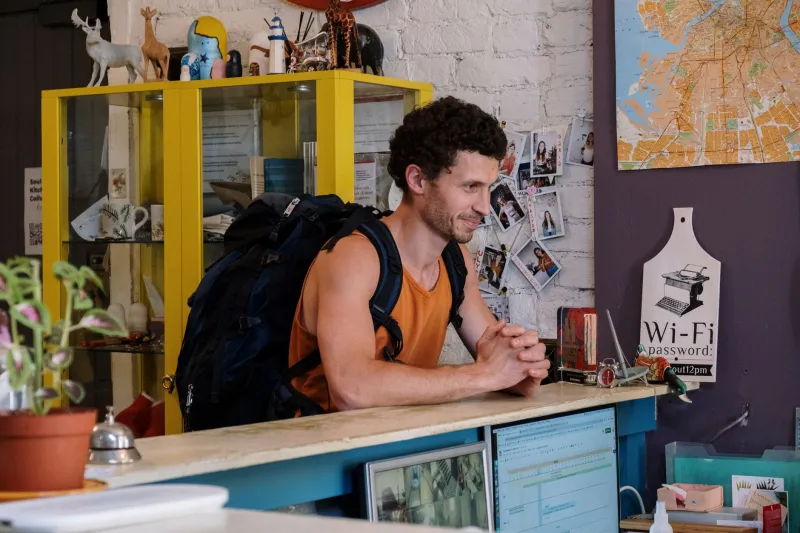
If you've spent more than a few nights in a hostel, you've probably met someone working the front desk who definitely isn't local. That person might be crashing there for free in exchange for 15 to 20 hours of shifts a week — checking guests in, running the social media account, pouring drinks at the bar.
Hostel work-trade programs are one of the most underutilized tools in the extended-travel toolkit. The deal varies by property, but the basic structure is usually the same: you contribute labor, they cover your bed. Some spots throw in meals. A few will pay a small stipend on top.
Take someone like Marcus, a 27-year-old from Chicago who left for what was supposed to be a six-week Central America trip. He ended up staying in Guatemala for four months — two of them working the bar at a hostel in Antigua in exchange for a private room and dinner every night. "I went from spending $40 a day to spending almost nothing," he said. "My savings basically flatlined. I just stopped burning through them."
The catch? You have to actually ask. Most hostels don't advertise these arrangements loudly. Walk in, be a decent human for a few days, and then have a direct conversation with the manager. The worst they can say is no.
Freelance Work That Travels as Well as You Do
For the backpackers who want more than just a covered bunk, the freelance economy has quietly made indefinite travel a real financial model. The key is building income streams before you leave — or at least having the skills to sell once you're on the road.
Content writing, graphic design, social media management, video editing, translation work, and web development are all fields where clients genuinely don't care where you are when you submit the deliverable. Platforms like Upwork, Fiverr, and Toptal have made it easier than ever to pick up project-based work from anywhere with a decent Wi-Fi connection.
The hostel common room, it turns out, is one of the best networking spaces on earth for this kind of thing. Travelers who've been on the road longer than you are often sitting on leads, client referrals, or at minimum, hard-won advice about which platforms actually pay reliably.
"I met a guy in a Medellín hostel who was making $2,000 a month writing product descriptions for Shopify stores," said Dani, a 30-year-old from Portland who has been traveling through South America for over a year. "He spent maybe 20 hours a week on it. The rest of the time he was just... living."
For Dani, the pivot came when she started offering Instagram content packages to small travel brands — something she built out of her own photography habit. She now earns enough to cover her expenses in most countries she passes through, with enough left over to keep moving.
Teaching English: The Old Reliable
It's not glamorous, and it's been talked about forever, but teaching English abroad remains one of the most accessible income streams for American travelers — precisely because being a native speaker is the main qualification in a huge number of markets.
Online platforms like VIPKid, iTalki, and Preply let you set your own hours and work from wherever you happen to be sleeping that week. In-person opportunities at language schools in Southeast Asia, Latin America, and parts of Europe can pay enough to cover local living costs with some left over.
The catch with in-person teaching is that it typically requires some commitment — a semester, a contract, a minimum number of months. That can feel like it conflicts with the nomadic lifestyle. But plenty of backpackers have found that planting themselves somewhere for three to six months, earning steadily, and then moving on is actually a more sustainable rhythm than constant motion on a shrinking budget.
The Gig Economy Abroad: What Actually Works
Some travelers try to plug into local gig work — driving for rideshare apps, delivering food, picking up shifts at bars or restaurants. The reality here is more complicated. Work authorization laws vary wildly by country, and working illegally on a tourist visa is a risk that can get you deported and banned from re-entering.
That said, there are legal pathways worth knowing about. Several countries — including Germany, New Zealand, Australia, and Ireland — offer working holiday visas specifically designed for young Americans who want to work while they travel. These visas allow you to take on legitimate employment for a set period, and the income can be surprisingly solid depending on the country's wage standards.
Australia in particular has a well-worn backpacker economy built around farm work, hospitality, and construction — jobs that pay well by Southeast Asian cost-of-living standards and can fund months of subsequent travel.
Stacking Multiple Streams
The travelers who sustain this lifestyle longest aren't usually relying on a single income source. They're stacking. A few freelance clients on retainer. A week of hostel work-trade here and there to zero out accommodation costs. The occasional one-off gig when the budget needs a top-up.
The mental model shift is the important part. Instead of thinking about your travel fund as a fixed pool of money slowly draining, you start thinking about it as something dynamic — money coming in and going out, a system you can actually manage.
That's the real hustle. Not grinding 40 hours a week from a coffee shop in Bali. Just building enough income flexibility that leaving stops feeling like a countdown.
Before You Go
If you're planning to stretch your trip beyond the standard two-week window, start building your income infrastructure before you board the plane. Set up at least one freelance profile. Research working holiday visa eligibility. Look into hostel work-trade policies at properties you're interested in staying at.
And when you get there, talk to the people who've been on the road longer than you. The common room at any good hostel is full of them. They've already figured out the parts you're still Googling.
The road doesn't have to end when your savings do. You just have to be willing to get a little creative about keeping the wheels turning.